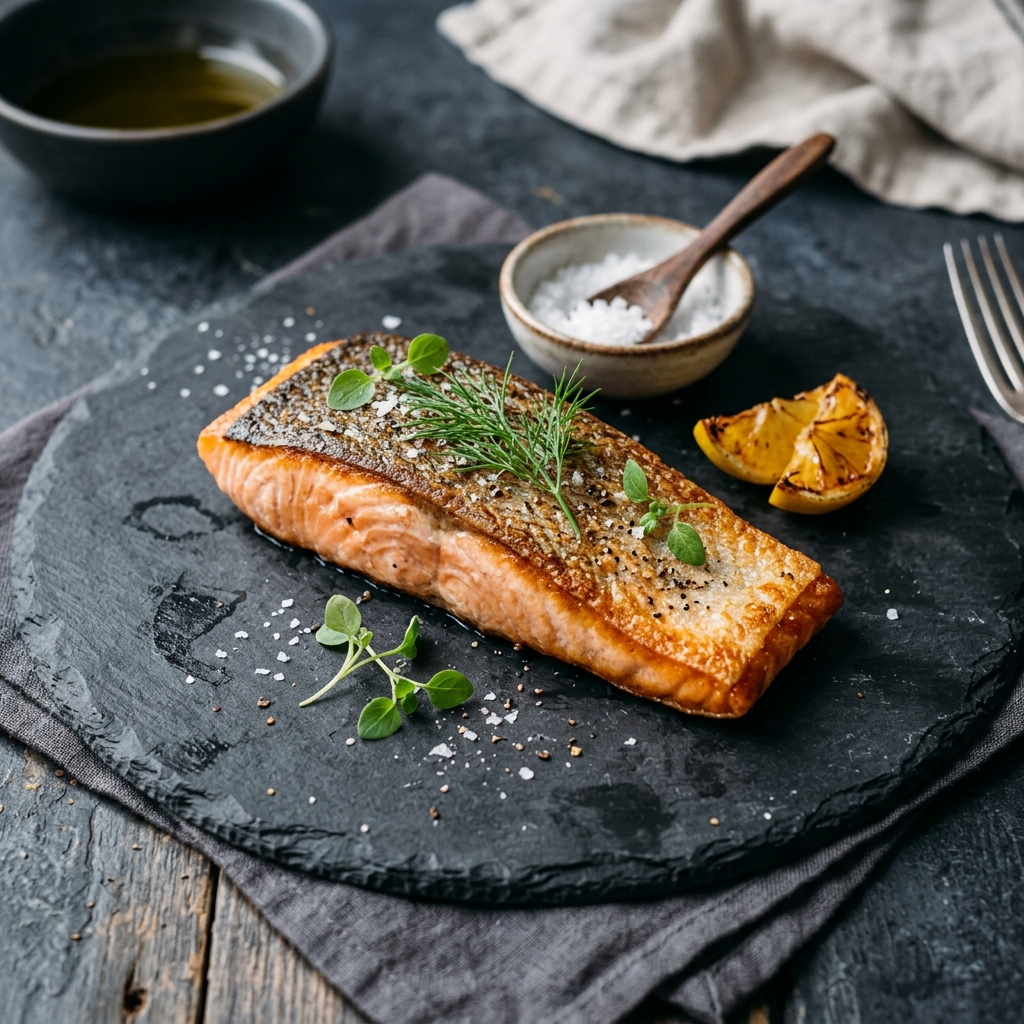
Recommended Intake & Goals
Consume 2-3 times per week to build cellular membrane fluidity, reduce chronic inflammation, and protect the brain from impact stress.
Preparation & Usage Steps
- Omega-3 fatty acids are emulsified by bile salts in the small intestine into micelles.
- Pancreatic lipase cleaves fatty acids from glycerol, enabling absorption into enterocytes.
- Fatty acids are re-esterified into triglycerides and packaged into chylomicrons, entering the lymphatic system.
- EPA and DHA are incorporated into cell membranes (especially in brain and heart tissue) and act as precursors to anti-inflammatory eicosanoids.
Nutrition Cues
"Always buy wild-caught salmon to avoid the antibiotics and synthetic colorants found in farmed fish."
"Cook skin-side down first to protect the delicate fats from oxidizing under direct heat."
"Season with turmeric and black pepper to double its anti-inflammatory effects."
Preparation Tips
- Wild salmon is a top source of Astaxanthin, a carotenoid that improves skin health, visual acuity, and muscle endurance in athletes.
- Pairing wild salmon with fresh ginger or turmeric creates an incredibly potent natural anti-inflammatory recovery meal.
Synergistic Foods & Bio-boosts
- Earthy Cedar Plank Salmon: Place wild salmon fillet on a pre-soaked cedar plank, brush with olive oil and sea salt, and grill over medium heat for 12-15 minutes.
🌱 HARVEST ENGINE
Ready to harvest Wild-Caught Salmon?
Start the webcam interactive harvest coach to gather this ingredient.
Q1 of 3
Which preparation or nutritional guideline belongs to the Wild-Caught Salmon?