Skip to content
PLATEWIKI
Anatomy Map Foods Articles Glossary Dietary Rules Earthy Blueprint
Recipes Nutrients Programs Meal Planner Fasting Timer
Leaderboard Join the Discord About
Kitchen Shop Merch
Athletes Saved
PLATEWIKI

The free, open sports nutrition and whole food library. Fuel smarter.

ExploreAnatomy MapAll FoodsProgramsArticlesAthlete ProfilesSaved Foods
LearnEarthy BlueprintMerchPartner With Us
ResourcesNutrition GlossaryDietary RulesFasting TimerAbout
CommunityJoin the DiscordNutrition Board (IG)Contact
LegalPrivacy PolicyTerms of Use

Disclaimer: Sports nutrition guidance and fasting timers carry risks if you have underlying conditions. Consult a medical professional before beginning any diet or fasting protocol. PlateWiki assumes no liability for health issues or nutritional decisions.

Nutritional data and dietary guidelines are curated in reference to the USDA FoodData Central database.

© 2026 PlateWiki. All rights reserved.

Anatomy MapSauerkraut
Gut & Digestion•• TargetedAll Athletes

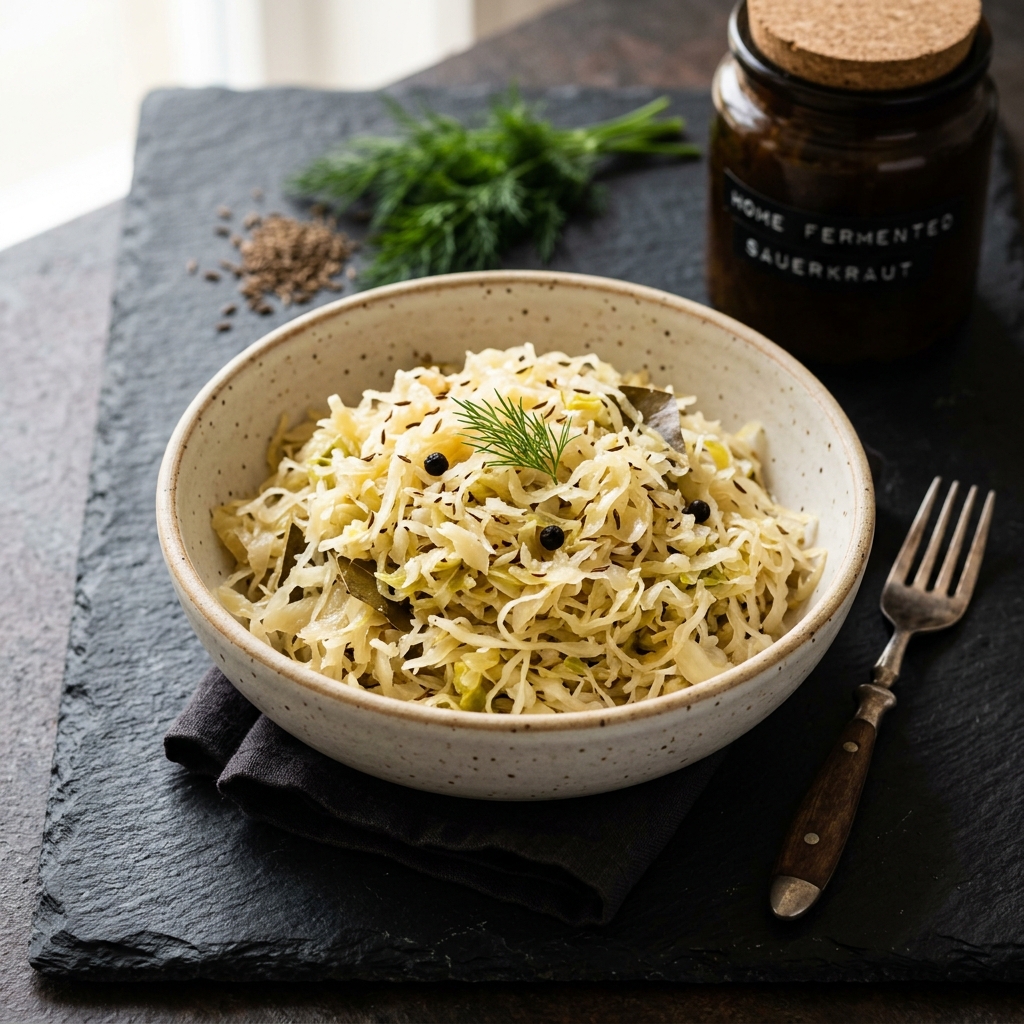
Sauerkraut

Raw fermented cabbage and the undisputed Lactobacillus density champion among whole foods, containing up to 10 billion CFU per serving of diverse probiotic strains including L. plantarum, L. brevis, and L. mesenteroides. The lacto-fermentation process also produces organic acids, vitamin C, vitamin K2, and bioavailable B-vitamins while pre-digesting fiber for enhanced gut tolerance.

rawfermentedside-dish
Reviewed by Nutrition Advisory Board · Last updated June 2026
Gut Wall & AbdominalsObliques
Sauerkraut

Recommended Intake & Goals

Eat 2-4 tablespoons of raw, unpasteurized sauerkraut with meals daily to establish and maintain a diverse gut microbiome and improve digestive efficiency.

Preparation & Usage Steps

  1. Lactobacillus bacteria from sauerkraut survive stomach acid (pH 1.5-3.5) and colonize the intestinal mucosa, competing with pathogenic bacteria for adhesion sites.
  2. Established Lactobacillus colonies produce lactic acid that lowers intestinal pH, creating an environment hostile to harmful bacteria like Clostridium and E. coli.
  3. Short-chain fatty acids (SCFAs—butyrate, propionate, acetate) are produced by bacterial fermentation of sauerkraut fiber, nourishing colonocytes and strengthening the intestinal barrier.
  4. Vitamin K2 (menaquinone) produced during fermentation activates osteocalcin for bone calcium deposition and matrix Gla protein for arterial calcification prevention.

Nutrition Cues

"Always choose raw, unpasteurized sauerkraut from the refrigerated section—shelf-stable versions are heat-treated and contain zero live probiotics."
"Start with 1 tablespoon per day and increase gradually to avoid gas and bloating from rapid microbiome shifts."
"Add sauerkraut to meals after cooking—heat kills the beneficial bacteria."

Preparation Tips

  • Drink 1-2 tablespoons of sauerkraut brine (the liquid in the jar) on an empty stomach each morning—it is loaded with concentrated probiotics and organic acids that prime digestive enzyme secretion.
  • Layer sauerkraut on top of meals after plating (never cook it into the dish) to preserve maximum live culture count and enzymatic activity.

Synergistic Foods & Bio-boosts

  • Probiotic Power Bowl: Top 1 cup cooked quinoa with 4oz grilled chicken, 1/4 cup raw sauerkraut, 1/2 sliced avocado, drizzle of tahini, and a sprinkle of sesame seeds.
🌱 HARVEST ENGINE

Ready to harvest Sauerkraut?

Start the webcam interactive harvest coach to gather this ingredient.

Launch Harvest Coach →
Q1 of 3
Which preparation or nutritional guideline belongs to the Sauerkraut?

Common Pitfalls & Warnings

  • Buying pasteurized sauerkraut from the shelf-stable aisle—pasteurization kills all probiotic bacteria and eliminates the primary gut health benefit.
  • Cooking sauerkraut at high heat before eating, which destroys the live Lactobacillus cultures and heat-sensitive vitamins.
  • Starting with large servings immediately, causing gas, bloating, and discomfort as the existing microbiome adjusts to the influx of new bacterial strains.

Where to Buy

From $2.98–4.48 per 16oz jar
🟦
WalmartBest Value
$2.98–4.48 per 16oz jar
🥬
Whole FoodsTop Quality
$5.99–8.49 per 16oz · Raw, unpasteurized with live cultures
📦
AmazonConvenient
$7.99–12.99 per 25oz

Prices are approximate US averages and may vary by location. Last verified July 2026.

COMMUNITY KITCHEN

Share Your Meal Prep

Unsure if your macro balance is correct? Upload a photo of your plate to get direct feedback from other bio-athletes.

#recipe-swap#ask-the-nutritionist
Share Meal Photo

Recipe Combinations

Gut Restoration Protocol (Sauerkraut + Kimchi)

Related Foods

KimchiGut & DigestionMisoGut & DigestionGreek YogurtMacronutrients

Recommended Kitchen Tools

🌪️

High-Speed Blender

Essential for preparing smooth, easily digestible pre-workout fruit smoothies and post-workout protein isolates.

⚖️

Digital Food Scale

Critical for precision portioning of macronutrient targets (complex carbohydrates, lean proteins, healthy lipids).