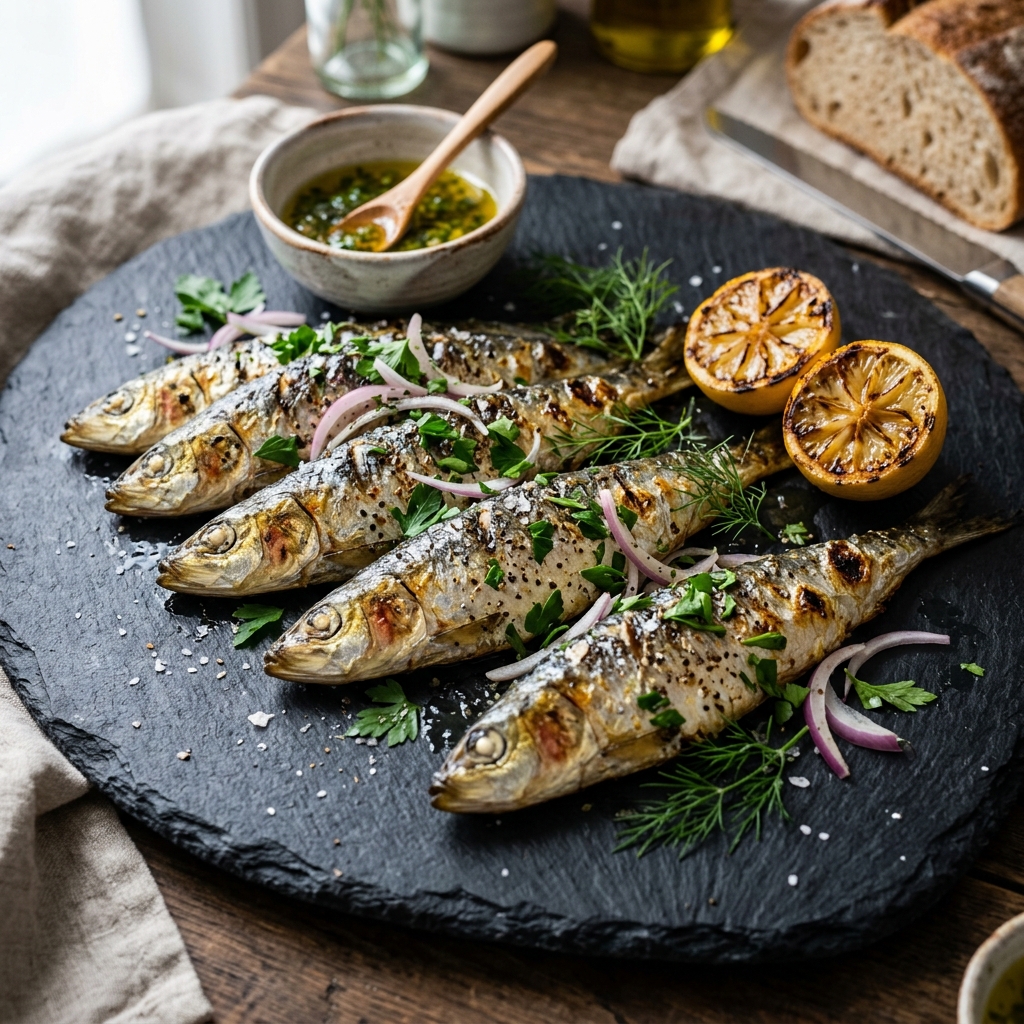
Recommended Intake & Goals
Eat one 3.75oz can of sardines 3-4 times per week as a protein source to simultaneously cover calcium, vitamin D, and omega-3 needs without mercury concern.
Preparation & Usage Steps
- EPA and DHA omega-3 fatty acids are absorbed in the small intestine and incorporated into cell membrane phospholipids throughout the body.
- EPA competes with arachidonic acid as a substrate for COX and LOX enzymes, producing anti-inflammatory series-3 prostaglandins and series-5 leukotrienes that resolve exercise-induced inflammation.
- Calcium hydroxyapatite from sardine bones is absorbed in the duodenum via vitamin D-dependent calbindin transport and deposited into bone matrix by osteoblasts.
- Preformed vitamin D3 (cholecalciferol) bypasses the UV-dependent skin synthesis step, directly entering hepatic 25-hydroxylation for systemic calcium regulation and immune modulation.
Nutrition Cues
"Choose sardines packed in olive oil for additional monounsaturated fat and better flavor, or in water for a leaner option."
"Eat the bones—they are soft, edible, and provide 35% of your daily calcium per can."
"Wild-caught sardines are always preferable; they are inherently low in contaminants due to short lifespan and low food chain position."
Preparation Tips
- Mash canned sardines (bones included) with avocado, lemon juice, and diced red onion for a high-protein, calcium-rich "sardine guac" that makes the bones completely undetectable.
- Pair sardines with a vitamin K2-rich food like natto or hard cheese: vitamin D enhances calcium absorption while K2 directs calcium into bones and away from arteries.
Synergistic Foods & Bio-boosts
- Mediterranean Sardine Power Plate: Drain 1 can sardines in olive oil, arrange on a plate with 1/2 sliced avocado, 10 cherry tomatoes, 1/4 cup olives, 2 tbsp capers, and a drizzle of lemon-herb vinaigrette. Serve with sourdough toast.
🌱 HARVEST ENGINE
Ready to harvest Sardines?
Start the webcam interactive harvest coach to gather this ingredient.
Q1 of 3
Which target muscle group is physiologically supported or target-fuelled by the Sardines?