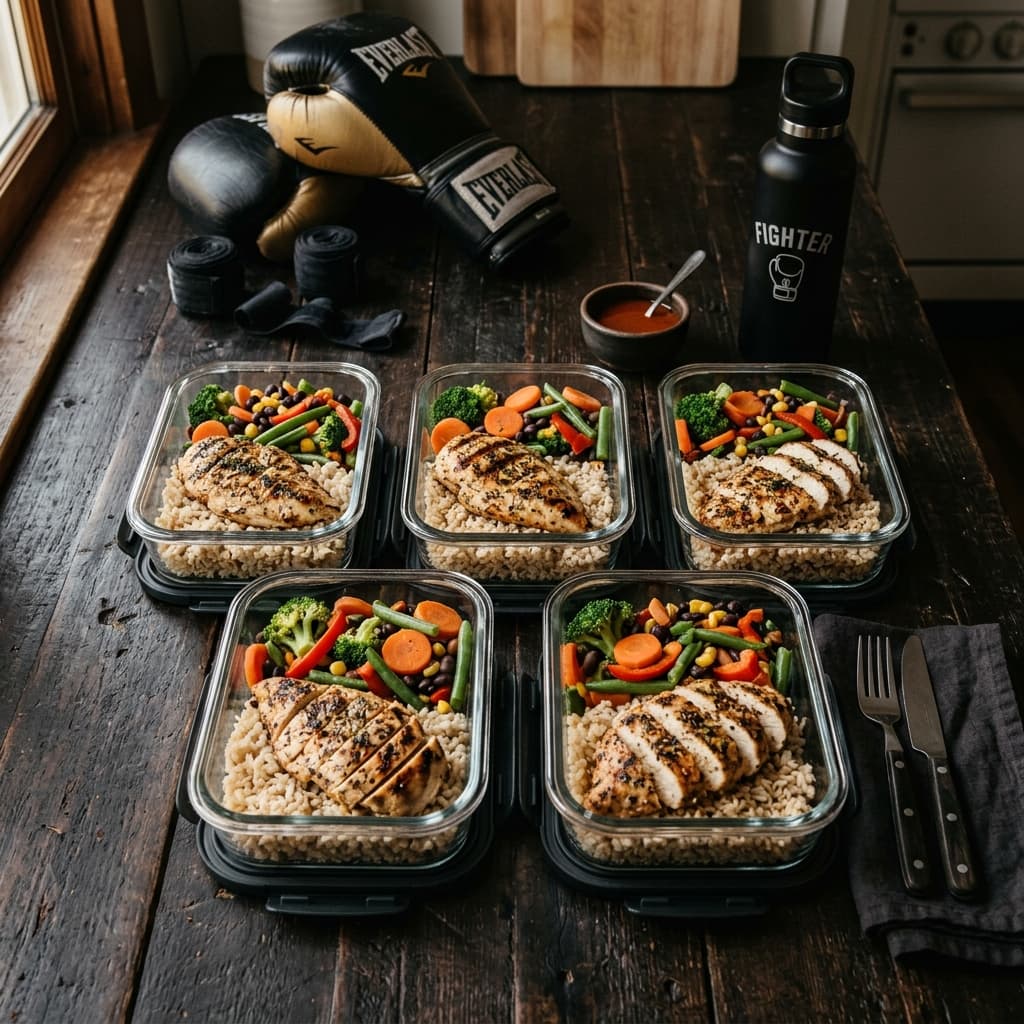
Fight Camp Meal Prep: Nutrient-Dense Recipes for Endurance
You cannot out-train a poor diet. During a six-to-eight-week fight camp, your body endures extreme physical stress from training, roadwork, and conditioning. If you fuel your body with processed foods or random meals, you will gas out in training and struggle to make weight.
Structured meal preparation keeps your energy stable and ensures you hit your target weight safely. By cooking your meals in advance, you remove the daily decision-making that leads to poor nutritional choices when you are fatigued.
This guide provides a comprehensive fight-camp meal prep protocol, detailing macronutrient requirements, batch-cooking strategies, and nutrient-dense recipes designed specifically for athletic nutrition endurance.
Macronutrient Rules for Athletes
Your body requires a specific balance of macronutrients to sustain high-volume training while gradually dropping fat.
Carbohydrates: The Primary Fuel
Carbohydrates are stored in your muscles and liver as glycogen. During high-intensity training, your body breaks down glycogen to produce energy. If your glycogen levels are low, your punch power drops and your decision-making slows down.
- Source: Focus on complex carbohydrates with a low glycemic index, such as brown rice, sweet potatoes, oats, and quinoa. These provide a slow release of energy.
- Timing: Consume your largest portion of complex carbohydrates two to three hours before your hardest training session, and immediately afterward to replenish depleted stores.
Proteins: Muscle Preservation and Repair
Intense training breaks down muscle fibers. You need adequate protein to repair this damage and prevent muscle loss while you are in a caloric deficit.
- Source: Lean proteins are best. Use skinless chicken breast, wild-caught salmon, lean ground turkey, eggs, and tofu.
- Calculation: Aim for 1.6 to 2.0 grams of protein per kilogram of body weight daily. Divide this intake evenly across four to five meals.
Fats: Hormone Regulation and Joint Health
Fats are necessary for hormone production, joint lubrication, and the absorption of vitamins. Do not cut fats completely out of your diet, even when trying to make weight.
- Source: Focus on monounsaturated and polyunsaturated fats from avocados, extra virgin olive oil, walnuts, almonds, and chia seeds. Keep saturated fats to a minimum.
The Weekly Batch-Cooking Protocol
Preparing meals daily is time-consuming and leads to inconsistency. Instead, prepare your meals twice per week: Sunday and Wednesday. This schedule keeps your food fresh and reduces the time you spend in the kitchen.
Prep Steps
- Purchase Containers: Buy twenty glass, airtight containers. Glass holds heat better than plastic, does not leach chemicals, and is microwave-safe.
- Clear the Calendar: Block out two hours on Sunday afternoon and Wednesday evening. Treat this time as a mandatory training session.
- Cook in Bulk: Roast vegetables, bake proteins, and boil grains simultaneously using your oven and stove.
- Weigh and Portion: Use a digital food scale to weigh every ingredient before placing it in the containers. This prevents portion creep, which can keep you from making weight.
Nutrient-Dense Fight Camp Recipes
These recipes are designed for bulk preparation. They provide maximum micronutrients per calorie to keep your immune system strong and your energy high.
1. Complex Carb Fuel: Sweet Potato and Turkey Prep
This meal provides clean carbohydrates for glycogen replenishment and lean protein for muscle repair.
Ingredients (Makes 5 servings):
- 1,000 grams of lean ground turkey (93% lean or higher)
- 1,200 grams of sweet potatoes (weighed raw)
- 500 grams of broccoli florets
- 2 tablespoons of olive oil
- Spices: Garlic powder, onion powder, cumin, black pepper, sea salt
Preparation:
- Wash the sweet potatoes and cut them into small cubes. Toss them in one tablespoon of olive oil, sea salt, and black pepper.
- Spread the sweet potatoes on a baking sheet and roast at 400°F (200°C) for 30 minutes, turning once.
- While the potatoes roast, heat the remaining olive oil in a large skillet over medium-high heat. Add the ground turkey and season with garlic, onion powder, cumin, salt, and pepper. Cook until fully browned.
- Steam the broccoli florets for 5 minutes until tender-crisp.
- Place five glass containers on your scale. Distribute the sweet potatoes, turkey, and broccoli evenly among the containers. Close the lids and let them cool before placing them in the refrigerator.
Nutritional Profile (Per Serving):
- Calories: 490
- Carbohydrates: 45 grams
- Protein: 42 grams
- Fat: 14 grams
2. The Recovery Bowl: Quinoa, Salmon, and Spinach Prep
Salmon contains omega-3 fatty acids, which reduce joint inflammation caused by heavy bag work and training.
Ingredients (Makes 5 servings):
- 800 grams of salmon fillets (skin removed)
- 300 grams of dry quinoa
- 400 grams of fresh baby spinach
- 150 grams of avocado (added fresh daily)
- Lemon juice, sea salt, dill, and black pepper
Preparation:
- Rinse the quinoa under cold water. Combine it with 600 ml of water in a pot. Bring to a boil, then cover, reduce heat to low, and simmer for 15 minutes.
- Place the salmon fillets on a baking sheet lined with parchment paper. Season with lemon juice, salt, pepper, and dill. Bake at 375°F (190°C) for 12 to 15 minutes.
- Lightly wilt the spinach in a dry pan over medium heat for 2 minutes. Do not overcook.
- Divide the cooked quinoa, salmon, and spinach into five containers.
- Slice 30 grams of fresh avocado and add it to the container on the day you eat the meal.
Nutritional Profile (Per Serving):
- Calories: 520
- Carbohydrates: 38 grams
- Protein: 39 grams
- Fat: 22 grams
3. Pre-Workout Endurance Oats
Eat this meal two hours before your training or conditioning sessions. It provides sustained energy and prevents cramping.
Ingredients (Makes 5 servings):
- 400 grams of rolled oats (not instant oats)
- 150 grams of whey protein isolate (vanilla or unflavored)
- 50 grams of chia seeds
- 250 grams of fresh blueberries
- 500 ml of unsweetened almond milk
Preparation:
- In a large bowl, mix the dry oats, whey protein, and chia seeds together.
- Distribute the dry mixture evenly into five jars or containers.
- Pour 100 ml of almond milk into each jar and stir thoroughly.
- Top each jar with 50 grams of fresh blueberries.
- Seal the jars and store them in the refrigerator overnight. The oats will absorb the liquid and soften.
Nutritional Profile (Per Serving):
- Calories: 410
- Carbohydrates: 52 grams
- Protein: 32 grams
- Fat: 8 grams
Weight Cutting Adjustments
As you progress through fight camp, you must adjust your meals to meet your weight goals without losing energy.
Step 1: Reduce Carbohydrates, Keep Protein High
When you need to drop weight in the final two weeks, do not reduce your protein intake. Protein protects your muscles. Instead, reduce your carbohydrate portions by 20% to 30%. Replace the volume with low-calorie vegetables like spinach, zucchini, and cucumber.
Step 2: Control Your Sodium Intake
High sodium causes water retention. Throughout fight camp, use sea salt to prevent cramping, but reduce your sodium intake during the final week before weigh-ins. Avoid processed foods, canned vegetables, and pre-packaged sauces.
Step 3: Increase Hydration Early
Drink five to six liters of water daily during the first five weeks of camp. This keeps your kidneys active and flush. Do not restrict water until the final 24 hours before weigh-ins, under the supervision of your coach.
Example 7-Day Fight Camp Meal Plan
| Meal | Type | Option |
|---|---|---|
| Breakfast | Pre-Workout | Pre-Workout Endurance Oats |
| Lunch | Fuel | Sweet Potato and Turkey Prep |
| Mid-Day Snack | Quick Energy | One apple with 20 grams of almonds |
| Dinner | Recovery | Quinoa, Salmon, and Spinach Prep |
Summary Checklist
- Batch-cook on Sundays and Wednesdays to maintain nutritional consistency.
- Use glass, airtight containers to store your meals.
- Prioritize complex carbohydrates for fuel and lean proteins for recovery.
- Weigh your food using a digital scale to track calories accurately.
- Eat wild-caught salmon to reduce training-induced joint inflammation.
- Lower carbohydrate intake slightly in the final weeks of camp to make weight safely.
See these techniques broken down by featured creator Coach Josh.
Ready to Practice?
Put what you learned into action with a guided shadowboxing session or timed heavy bag workout.